The AI Gold Rush Trap
Enterprises today are flooded with brilliant but narrow AI apps — tools for call centers, forecasting, computer vision, IoT analytics, and document automation. These apps often look like quick wins, but here’s the trap:
👉 Everyone is focused on the functionality of the app — not on its scalability.
And this obsession with functionality, while ignoring enterprise architecture, is one of the main reasons AI initiatives stall after pilots.
Why Most AI Initiatives Break at Scale
· Data fragmentation – each app traps data in silos.
Data fragmentation – each app traps data in silos.
· External Data – often driving multimodal requirements.
· Governance gaps – inconsistent compliance, risk, and oversight.
· Integration complexity – every new solution multiplies costs and fragility.
· Enterprise risk – no unified control over lineage, auditability, or security.
· External Data – often driving multimodal requirements.
· Governance gaps – inconsistent compliance, risk, and oversight.
· Integration complexity – every new solution multiplies costs and fragility.
· Enterprise risk – no unified control over lineage, auditability, or security.
Apps succeed in isolation but collapse under the weight of enterprise scale.
A CTO’s Lesson: Why Platforms Matter
In my last CTO role, I tried to implement AI initiatives using a patchwork of ERP systems, DIY projects, and point solutions. It didn’t progress. The real breakthrough came when we anchored the architecture on a platform.
Once the data was connected into the platform:
· Data access became near real time without constant unique data extractions.
· Data models became reusable across multiple use cases.
· Scale-out accelerated — we could expand adoption without rebuilding from scratch.
That shift — from app-first to platform-first — changed everything.
Platforms as the Enterprise Backbone
Platforms like C3.ai and Palantir Foundry provide what point solutions cannot:
· Unified data view – connecting ERP, CRM, IoT, documents, and external feeds.
· Reusable AI models – deploy once, apply across multiple business units.
· Governance & security – consistent policies, auditability, and compliance.
· Application & agent orchestration – enterprise-grade AI applications and safe agent management.
This makes platforms the control plane for enterprise AI, especially as AI agents become mainstream.
How C3.ai and Foundry Relate to Databricks, Snowflake, BigQuery, and Microsoft Fabric
These platforms are often seen as competing, but in reality they have different roles — and the right choice depends on your enterprise strategy.
C3.ai and Palantir Foundry focus on helping companies turn data into enterprise AI applications and agents. They provide reusable data models, governance, and orchestration that make AI sustainable at scale.
Databricks, Snowflake, BigQuery, and Microsoft Fabric are primarily data and analytics platforms. They excel at managing large volumes of data, powering analytics, and supporting broad reporting and BI needs across the business.
Three patterns we see in enterprises today:
1. Platform-first (C3/Foundry at the core):
· The enterprise uses C3 or Foundry as the main platform.
· Data is connected directly into the platform, and AI use cases scale quickly because models and workflows are reusable.
· Analytics tools may still be used, but they play a supporting role.
2. Dual-core (Platform + Lakehouse side by side):
· Companies with major investments in Databricks, Snowflake, or BigQuery keep those for broad analytics.
· C3/Foundry is added on top to run AI applications, manage agents, and enforce governance.
· Both are essential, but with clear roles.
3. Lakehouse-first (analytics-driven):
· Some companies lean on Databricks, Snowflake, or BigQuery as their foundation and add AI capabilities there.
· They may still bring in C3/Foundry for specialized AI use cases or to manage models & agents where governance is critical.
· They also may bring C3/Foundry in for the Application layer including Gen AI.
A Message to Vendors
If you’re building a niche AI app or agent:
· Competing outside of these platforms is risky — you’ll struggle to scale inside enterprises.
· The smarter play is to align with platforms like C3.ai and Foundry, integrate natively, and position your solution as an extension of their architecture.
· This not only increases adoption odds but also future-proofs your solution as enterprises move toward platform-first AI governance.
Board-Level Framing (CLEARED AI™, GBS-AI™, COI-AI™)
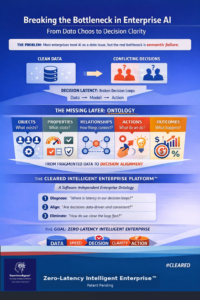
When advising boards, I stress this through CLEARED AI™ (ExperienceBypass Value Framework for AI Enabled Enterprise Transformation):
· Clarify – Stop chasing app features. Anchor to enterprise outcomes.
· Architect – Build around platforms like C3 or Foundry; keep lakehouses if they add analytic value.
· Deliver – Scale AI apps and agents with governance, sustainability, and reuse.
This scales into GBS-AI™ (AI-driven Global Business Services) and COI-AI™ (Centers of Integrated AI Operations) — embedding platforms as the enterprise nervous system.
Final Thought
Most AI projects fail not from lack of ambition or algorithmic failure, but because enterprises chase apps and functionality without thinking about scalability and sustainability.
The lesson is clear:
· Apps deliver features.
· Platforms deliver scale.
Enterprises & Vendors who align with platforms improve their odds of success.
And platforms like C3.ai and Foundry are the backbone that makes AI scalable & sustainable at the enterprise level.
Question for you: Is your enterprise still chasing AI app functionality, or are you ready to anchor your strategy on platforms that scale? Let me know, we can assist you including creating a commercial relationship.